Denver’s population story has evolved. For years, rapid growth fueled strong Denver home values. However, recent data indicates a shift: growth has slowed, more people are leaving Colorado than moving in domestically, and some Denver residents are relocating to surrounding suburbs.
For homeowners, this raises a crucial question: What does this mean for Denver home values?
The answer is more nuanced than a simple up or down.
Understanding Denver Home Values Amid Shifting Trends
Denver home values are currently shaped by a combination of slower population growth, increased out-migration, and ongoing new development. While buyer demand has softened in some areas, a persistently limited housing supply and the strong appeal of established neighborhoods continue to support values across much of Denver.
Colorado’s Population Growth Slows Significantly
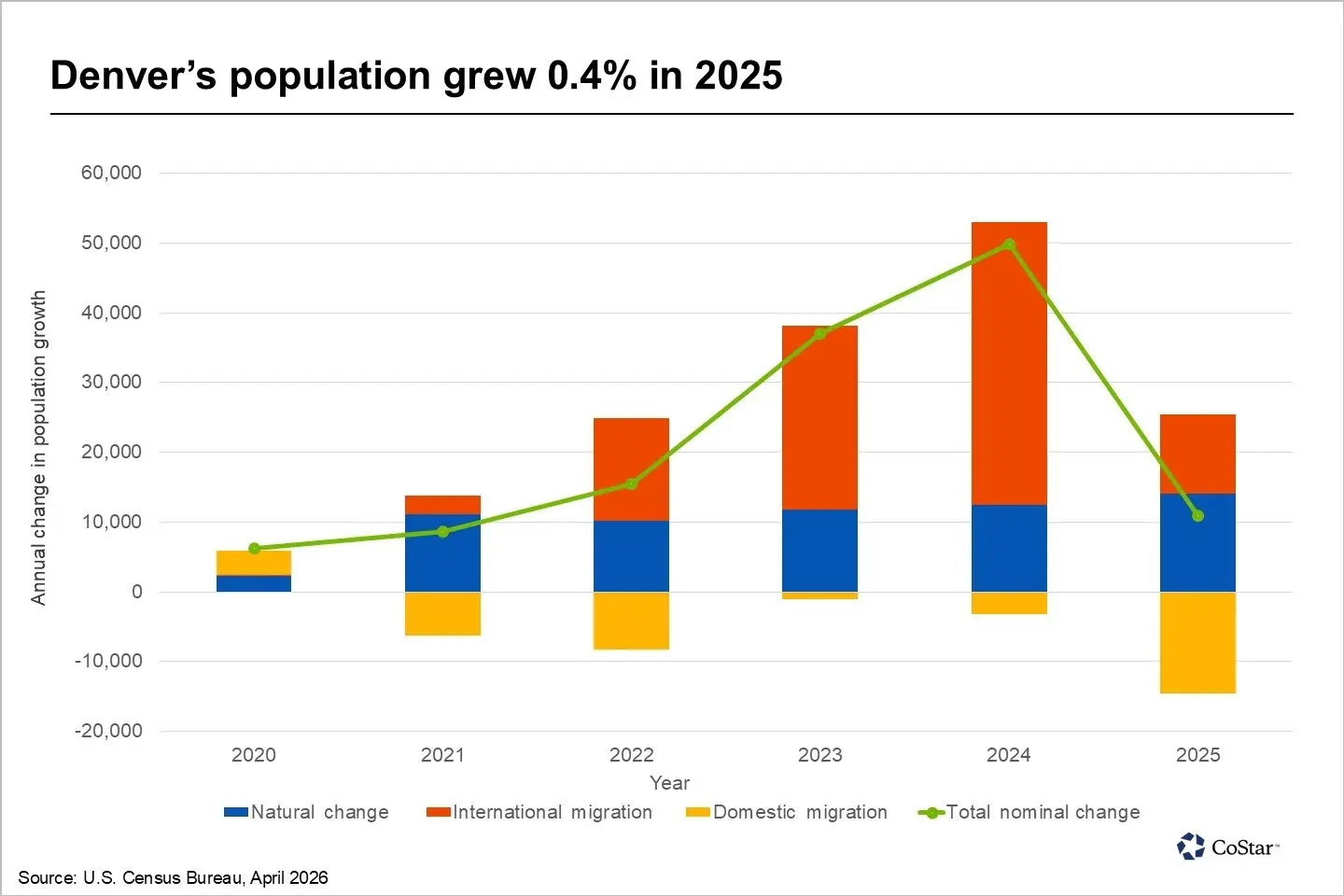
Recent data from the Colorado State Demography Office confirms a notable slowdown in population growth across Colorado. This marks a significant departure from the robust inbound migration seen in the 2010s.
- Growth was just 0.4% year-over-year, reflecting one of the slowest rates in decades (9News).
- More than 12,000 residents left Colorado for other states than arrived (CSDOS).
This demographic shift means demand is no longer being propelled by rapid population inflows at the same pace, directly influencing Denver home values.
Denver Sees Different Trends Than Its Suburbs
The population shift is particularly noticeable at the local level. Recent reporting (Denverite) indicates that Denver’s population has slightly declined, while surrounding suburbs are experiencing growth.
This suggests many are moving within the metro area, seeking different lifestyle or housing options. This trend impacts Denver home values by:
- Increasing competition in suburban markets.
- Slowing demand growth in some urban areas.
- Shifting buyer preferences toward more space and flexibility.
Out-Migration Affects Buyer Demand
Colorado is also experiencing a notable shift in migration patterns, with fewer people moving into the state compared to previous years. This directly impacts Denver home values in several key ways:
- Buyers often have more negotiating power than in peak years.
- Homes may take longer to sell if not priced strategically.
- Demand has become more selective rather than broadly urgent.
In essence, the market has transitioned from a seller’s frenzy to a more strategic approach.
New Development Adds Crucial Supply
Concurrently, new development continues to add housing inventory across Denver, including new construction homes, redevelopment projects, and mixed-use communities. This increased supply, combined with slower population growth, contributes to a more balanced market.
For Denver home values, this means:
- Pricing must accurately reflect current market competition.
- Buyers have a wider array of options to consider.
- Well-positioned and desirable homes continue to perform strongly.
Local Context: Is Park Hill’s Stability Different?
Not all Denver neighborhoods are affected uniformly by these broader trends. Established areas like Park Hill often exhibit more stability due to factors such as relatively limited housing inventory, consistent demand driven by architectural character, and less large-scale redevelopment.
This helps stabilize Park Hill home values, even as the wider Denver market evolves. Buyers seeking homes in established neighborhoods frequently prioritize lot size, mature landscaping, and unique home styles, all of which continue to support local demand.
Key Takeaways for Denver Home Values
- Colorado’s population growth has significantly slowed.
- Denver is experiencing slight population declines while its suburbs grow.
- Out-migration has eased overall housing demand pressure.
- New development is increasing housing supply and competition.
- Established neighborhoods like Park Hill show greater market stability.
Market Normalization, Not Decline
Denver’s housing market is not declining; it is normalizing. The shift from rapid growth to a more balanced environment means that pricing, presentation, and location are now even more critical factors in determining Denver home values.
For homeowners, opportunities still exist, but they require a more strategic and informed approach to selling.


